
Environmental-health scientist Dr. Christopher Ollson supported the air-permit application for Project Jupiter’s proposed fuel-cell microgrid in comments submitted to the New Mexico Environment Department, Oracle announced on September 14, 2026. His review projects that the updated design would reduce nitrogen oxide emissions by approximately 92 percent compared with the previously planned natural-gas turbines and diesel backup generators.
Ollson, who has more than 25 years of experience assessing facility emissions and public-health impacts, was retained by Yucca Growth Infrastructure to review the application. The project is in the Paso del Norte border airshed, covering southern Doña Ana County, El Paso, and Ciudad Juárez, where Oracle said communities have faced air-quality challenges linked to traffic, industry, and windblown dust.
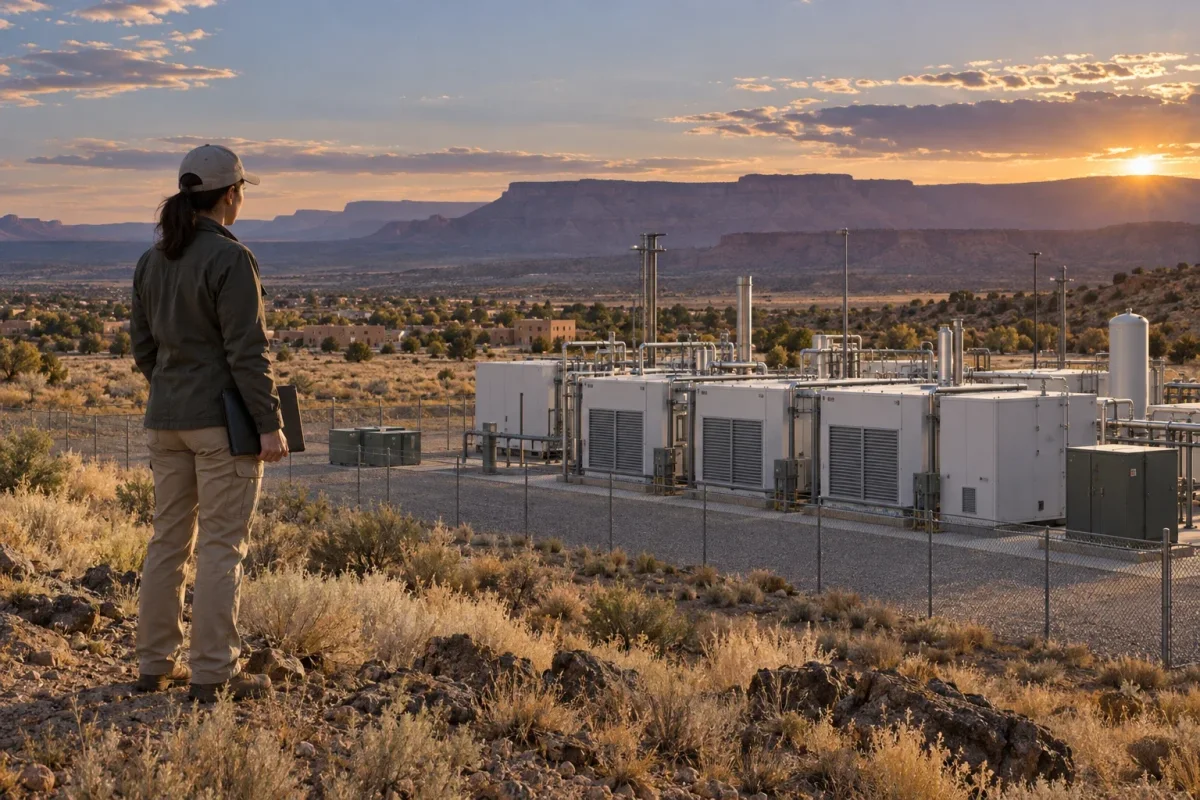
According to Ollson’s review, fuel cells would generate electricity electrochemically instead of through combustion, limiting pollutants associated with combustion-based power. The updated plan would also eliminate diesel backup generators, which can emit particulate matter and nitrogen oxides. “Because this community’s airshed is already overburdened, the choice of energy-generating technology matters,” Ollson wrote.
Ollson also described ongoing water use under the revised design as a “negligible amount.” Oracle said Project Jupiter would use no public drinking water for data center cooling or fuel-cell operations. The systems would instead receive a one-time fill of approximately 11 million gallons of non-potable water, followed by an estimated 168,000 gallons annually for maintenance. Averaged over 15 years, Oracle compared that amount with the annual water use of nine U.S. households over the same period.
Oracle said it is working with Arable to conserve more water than the project uses. Project Jupiter has also committed $50 million to local water and wastewater infrastructure in Dona Ana County, with approximately 80 percent already funded, according to the company.
Oracle said the project has generated nearly $80 million in state and county tax revenue and is expected to produce more than $4.7 billion in long-term economic impact for New Mexico. Nearly 700 New Mexico residents have worked onsite to date, while the project is on pace to create more than 7,000 construction jobs and 1,500 ongoing project-supported jobs after construction is completed, the company said.