
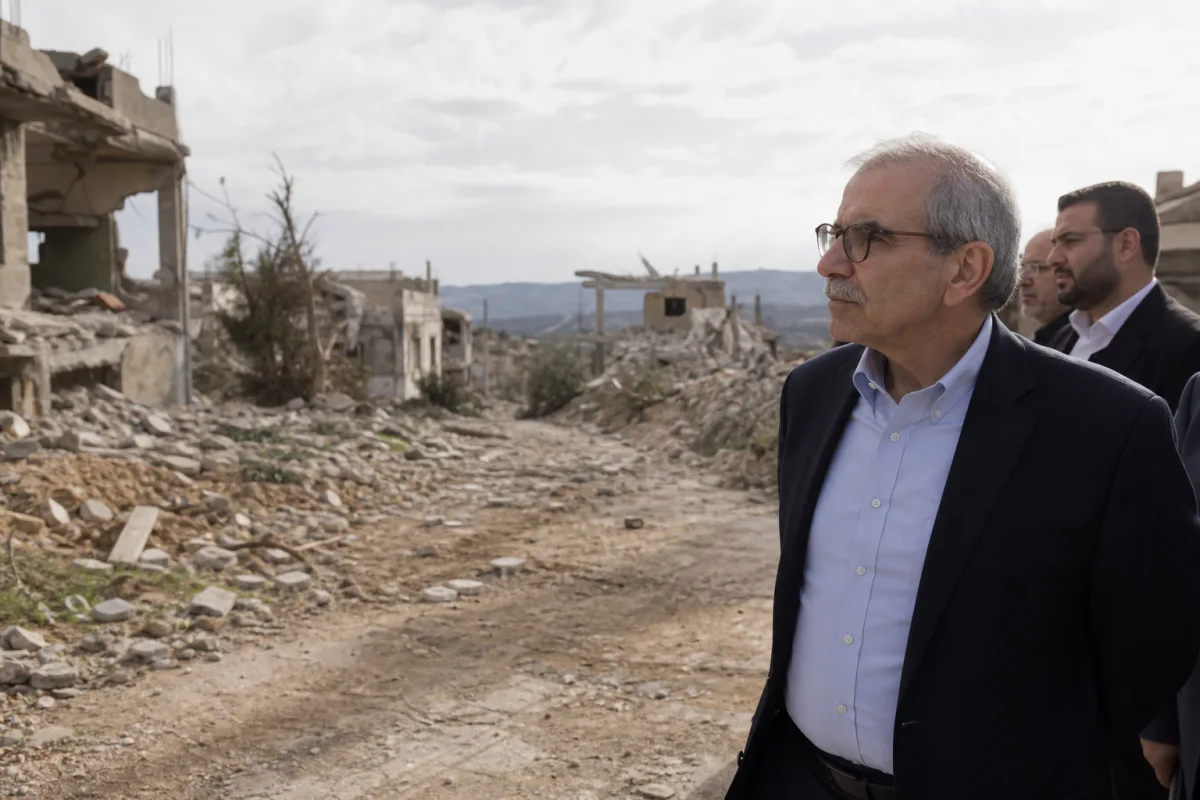
Lebanon’s Prime Minister Nawaf Salam visited the battered southern village of Zawtar Al Gharbieh on Wednesday, as a Lebanese-Israeli agreement brokered by Washington appeared to enter its implementation phase after a monthslong war. Salam’s visit came a day after President Joseph Aoun met U.S. President Donald Trump at the White House.
Trump promised to support the Lebanese government in its effort to establish state control across the country. Lebanon and Israel signed the agreement in late June. It calls for the Lebanese military to deploy in areas of southern Lebanon where Hezbollah had a military presence and influence, while Israeli troops would withdraw from dozens of villages they have occupied.
The two sides later agreed on a pilot zone consisting of a series of villages to test the agreement’s implementation. Israeli troops have carried out strikes and ground operations in those towns and villages, but none is under Israeli occupation. The Lebanese army has also not deployed there in large numbers.
Standing beside Lebanon’s defense minister and senior military officials, Salam pitched a Lebanese flag near a destroyed building and pledged that the government would begin rebuilding homes and infrastructure. “We have insisted since the beginning that our goal is the complete Israeli withdrawal from all our territory,” Salam said. “What we are seeing today is just the beginning, but we remain determined and steadfast, and will continue to mobilize all political and diplomatic efforts to secure a full withdrawal from all of Lebanese territory.”
Hezbollah has condemned the government’s direct talks with Israel and rejected the agreement, but it has not attempted to sabotage the arrangement through military means. Hezbollah’s leadership believes Israel cannot be pressured to withdraw solely through diplomatic means and that Lebanon lacks the leverage of its key ally Iran in negotiations. Trump did not discuss the pilot zone extensively during his meeting with Aoun, but pledged support for Lebanon without specifying the details.
The latest war between Israel and Hezbollah began March 2, after Hezbollah fired rockets toward Israel in solidarity with war-torn Iran, its main backer. Israel responded with an aerial campaign and ground invasion in Lebanon that killed more than 4,000 people and displaced 1.2 million. Lebanon’s top political leadership criticized Hezbollah for drawing the country into another war while also condemning Israel’s widespread bombing and ground invasion.