
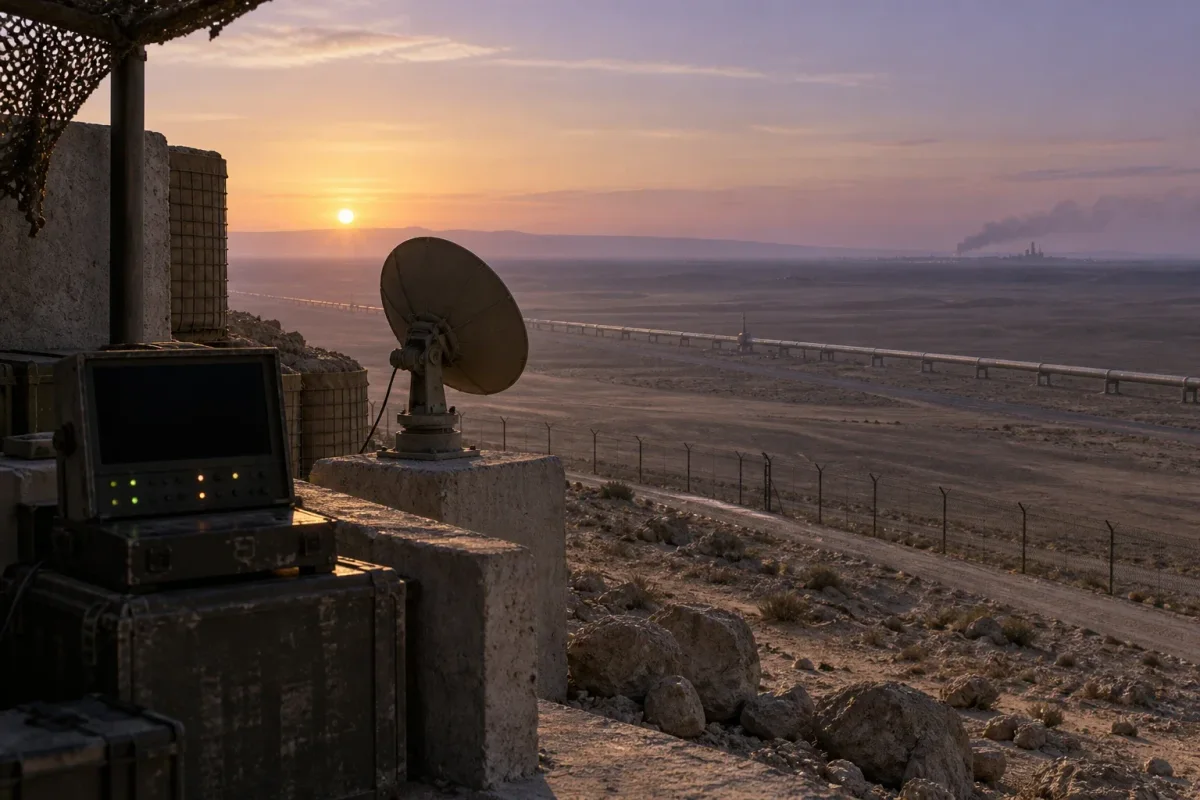
Iraq’s government said Saturday that attacks on a major Saudi oil pipeline originated from Iraqi territory and opened an investigation, while an umbrella group of Iran-backed Iraqi militias denied responsibility. Baghdad dismissed the commander and police chief of Maysan province as Saudi Arabia kept the cross-country pipeline shut after Friday’s drone attack.
Iraqi Prime Minister Ali al-Zaidi ordered an investigation into the operations command of Maysan province, which borders Iran, and removed the provincial commander. His office later announced that the provincial police chief had also been dismissed. The militia umbrella group said it would cooperate with the investigation, even as it praised the Houthis’ “ongoing battlefield victories against Saudi forces.”
Saudi Arabia described the pipeline closure as a “precautionary measure.” The kingdom said several drones had come from Iraq but announced that it would not retaliate, giving the Iraqi government “an opportunity to take the necessary measures.” Baghdad is already under pressure to stop local militias from assisting other Iran-aligned groups in the region. The government has ordered nonstate groups to disarm by Sept. 30, although several of the strongest militias have said they will not comply.
The dispute comes as the Iran-backed Houthi rebels advance along Yemen’s west coast against the Saudi-backed coalition. On Friday, the Houthis seized an island in the Bab el-Mandeb Strait, a shipping route carrying around 12% of global trade. The strait has become particularly important for Saudi oil shipments since the six-month Iran-U.S. war disrupted traffic through the Strait of Hormuz. The Houthis’ increased control of Bab el-Mandeb could place further pressure on global oil prices, which have already risen during the war.
Speaking to reporters in Dublin on Saturday, U.S. President Donald Trump said Iran was “probably” responsible for the pipeline attack but sought to ease concerns. He said his administration had held discussions with the Houthis without specifying when; the administration engaged in at least one round of talks with the group in May 2025. “The Houthis called us, and they don’t want to fight with us,” Trump said. “They would much prefer not having us involved, and they’re letting most ships go through.”