
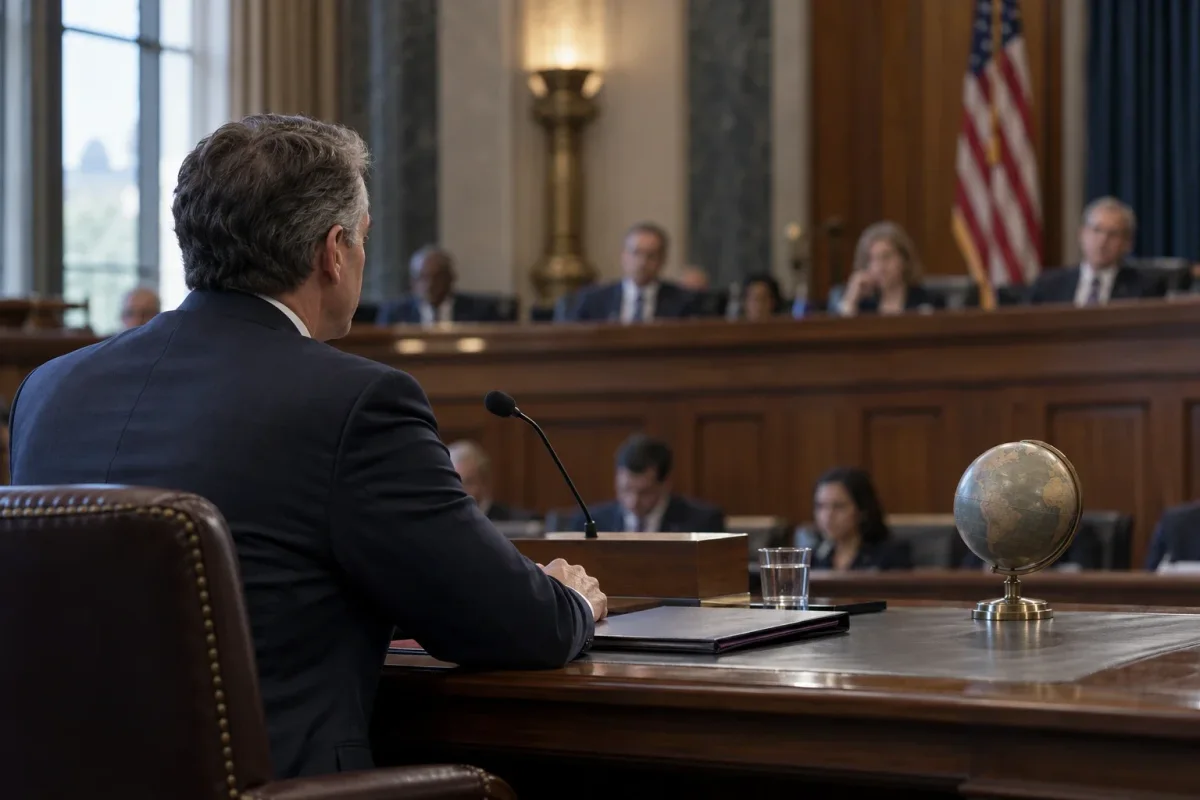
Treasury Secretary Scott Bessent told the House Committee on Financial Services on September 15, 2026, that the administration is refocusing U.S. participation in international financial institutions on economic growth and American economic interests. He said the recent G20 Finance Ministerial in Asheville produced broad agreement on growth and consensus among economies representing more than two-thirds of global GDP on several financial priorities.
According to Bessent’s prepared testimony, those priorities include addressing excessive and persistent imbalances, advancing financial literacy, improving the global sovereign debt architecture and supporting regulatory modernization. He characterized the agenda as a return to the G20’s core mission after decades of expanding mandates, and said the administration is applying similar discipline to the International Monetary Fund and World Bank so they remain focused on their core mandates and economic growth.
Bessent also presented the administration’s account of domestic economic conditions. He said the private sector has created more than 1 million jobs under President Donald Trump, real wages are rising faster than inflation, and the bottom 25 percent of wage earners are receiving larger wage increases than top earners. He contrasted those developments with the preceding period, when he said inflation reached a 40-year high and middle-class families faced cumulative price increases of 21.5 percent.
On tax policy, Bessent said more than 64 million returns claimed at least one provision of the Working Families Tax Cuts: No Tax on Tips, No Tax on Overtime, no tax on American car-loan interest, or an enhanced deduction for low- and middle-income seniors. He said working families received more than $325 billion in refunds through Tax Day and more than 40 million families claimed the permanently doubled and expanded Child Tax Credit. He further argued that the legislation prevented a tax increase of more than $5 trillion.
Bessent cited eight consecutive months of domestic manufacturing growth through August, business activity at a 52-month high and an Atlanta Federal Reserve projection that third-quarter GDP growth would exceed 4 percent. He described those indicators and planned corporate investment as evidence of an industrial expansion moving into production, while presenting the figures as part of the administration’s economic assessment.
The secretary concluded by linking domestic economic strength to U.S. pressure on the Islamic Republic of Iran and its enablers. He described the policy as an economic isolation campaign and said President Trump had acted against a regime that seeks nuclear weapons. Bessent argued that U.S. economic growth strengthens the country’s capacity to confront Iran, placing that effort alongside the administration’s international financial agenda and domestic economic policies.